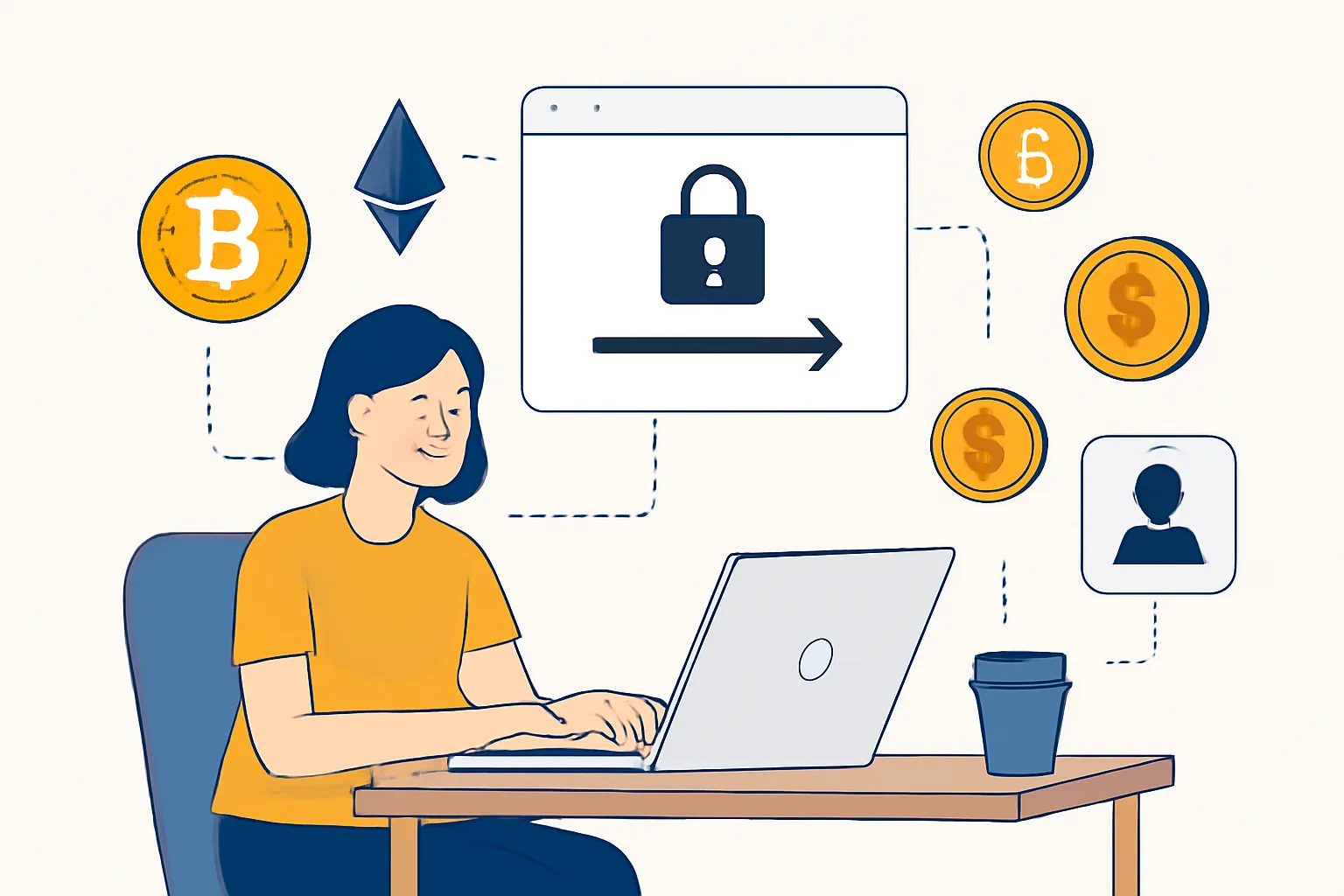
A crypto payment gateway is a service that helps a freelancer accept cryptocurrency from a client without having to manually negotiate every technical step. In simple terms, it sits between the invoice and the blockchain. The client pays through a link, checkout page, or wallet address; the gateway detects the payment, confirms it, and can often settle the funds in crypto or convert them into fiat.
For solo professionals, that middle layer matters. Freelancers rarely have the time to chase payments across time zones, explain wallet formats, or troubleshoot transactions with every new client. A gateway makes the process feel closer to standard online invoicing, which is especially helpful when the work is digital, remote, and cross-border. Designers, developers, writers, consultants, and virtual assistants often use crypto because it can fit naturally into international workflows, and a crypto payment gateway for freelancers can make that setup far easier to manage.
There is also a practical side to it. Some clients prefer crypto because they move funds quickly or already operate in a crypto-native business environment. Others simply want one less banking friction point when hiring talent abroad. If you want a broader context on how these systems work in ecommerce, the Crypto Payment Gateway for Ecommerce Guide gives a useful overview, even if your use case is a freelance service instead of a storefront.
For freelancers, the appeal is not abstract. It is about getting paid for a project without waiting through weekend bank holds, international wire delays, or payment reversals that seem to appear out of nowhere. Of course, crypto is not magic. It introduces its own rules, and those rules deserve attention.
Benefits and Tradeoffs for Freelancers
The clearest advantage of getting paid in crypto is speed. A client in another country can send funds without the traditional banking maze. That can be a relief when your regular work includes urgent deliverables, milestone payments, or recurring retainers. In some cases, the payment process can be easier than waiting for a card processor or international transfer to clear.
Crypto can also reduce dependence on a single payment rail. If a client’s bank does not play nicely with your bank, the relationship can become unnecessarily complicated. A crypto payment option gives both sides another path. For freelancers serving web3 companies, international startups, or tech-savvy clients, that flexibility can feel normal rather than unusual.
There are tradeoffs, though, and they are worth stating plainly. Price volatility is the one most freelancers notice first. If you invoice in crypto and hold that crypto, the value can move before you convert it. Some freelancers prefer to settle in stablecoins to reduce that swing; others convert immediately to fiat. Either way, the choice should be deliberate, not accidental.
Fees can also be less predictable than people expect. A network fee, gateway fee, and exchange spread may all appear at different moments. The total cost is not always huge, but it should be understood before you make crypto your default. And while crypto can reduce friction, it can create confusion for clients who have never used a wallet before. A smooth payment experience depends on clear instructions and a professional tone.
There is another issue that freelancers sometimes discover late: accounting and tax records. Crypto income still needs to be tracked carefully, often with timestamps, exchange rates, and the value received at the time of payment. It is not something to improvise at year-end.
How to Invoice Clients in Crypto
If you want to invoice clients in crypto, keep the process structured. The goal is not to sound technical; it is to make payment straightforward. A good crypto invoice should feel as familiar as any other freelance invoice, only with a different payment rail.
- State the service clearly. Include the project name, deliverables, date, and invoice number.
- Specify the payment currency. If you are charging in Bitcoin, say so plainly. If you prefer a stablecoin or want to quote in fiat and settle in crypto, make that explicit.
- Set payment terms. Include due date, accepted network, and whether partial payments are allowed.
- Add the payment method. This can be a wallet address, a payment link, or a gateway-generated checkout page.
- Include exact instructions. Tell the client which network to use, whether transaction fees are their responsibility, and how you will confirm receipt.
Clarity matters more than clever wording. Avoid vague phrases like “send some BTC to this address.” Instead, make the invoice read like a professional document. For example: “Payment due in Bitcoin (BTC) via the Bitcoin network. Amount due: 0.025 BTC. Please ensure the full invoice amount is sent before the due date.”
If you are using a gateway, the invoice can be even cleaner. Many services generate a payment link or a hosted checkout page that handles exchange-rate calculation and confirmation automatically. That removes a lot of back-and-forth, especially with first-time crypto clients. It also cuts down on the classic mistakes: the wrong amount, the wrong chain, or funds sent to the wrong address — all of which can turn a simple invoice into an unplanned support ticket.
One useful habit is to write a short payment note at the bottom of every crypto invoice: what is being paid, what coin is accepted, what happens after confirmation, and who to contact if the client gets stuck. It sounds small, but it reduces friction noticeably.
How to Accept Bitcoin Payments as a Freelancer
Bitcoin remains the most recognized option for freelancers who want to accept crypto, so it deserves its own process. First, choose how you will receive it. You can use a self-custody wallet, a hosted wallet, or a payment gateway that routes the transaction for you. Each option has tradeoffs. A self-custody wallet gives you control, but also more responsibility. A gateway can simplify invoicing and exchange-rate handling. The right choice depends on how hands-on you want to be.
Start by setting up a wallet you trust and understanding how it works before you send any invoice. Create a fresh receiving address if the wallet supports it. Many freelancers prefer to use a new address per invoice for record-keeping and privacy. Then test the process with a small transaction, if possible. If you want a more detailed checklist before launching a live payment setup, test crypto payment gateway before going is a helpful reference, even if you are not building a full ecommerce checkout.
When you invoice in Bitcoin, exchange-rate handling deserves special attention. You need to decide whether the amount is fixed in BTC or fixed in fiat and converted at the time of invoicing. Those are not the same thing. If you quote a client $1,000 worth of work, say whether they owe the BTC equivalent at the time the invoice is issued or at the time of payment. Without that detail, both sides may interpret the number differently.
Confirmations also matter. A payment might appear in a wallet before it is fully confirmed on the network. For small freelance projects, some people wait for one confirmation; others wait longer for higher-value work. There is no universal rule here, just a need to be consistent. Tell clients what to expect, and use the same standard across invoices.
Common mistakes are usually preventable. Sending the wrong wallet address, forgetting to specify the network, and treating a pending transaction as settled are the big ones. Another subtle error is leaving the invoice open-ended after the client has paid. Close the loop. Mark the invoice as paid, send a brief receipt, and note the transaction reference for your records.
Choosing the Right Crypto Payment Gateway
The best gateway for a freelancer is not necessarily the one with the longest feature list. It is the one that fits your workflow and does not get in the way. Start with supported currencies. If your clients mainly use Bitcoin, that is a baseline. If you also want Ethereum, stablecoins, or multiple chains, check that the gateway supports them in a way that is actually usable, not just listed in a footnote.
Ease of use matters more than people admit. A polished dashboard is nice, but what really counts is how quickly you can create an invoice, share it, and reconcile the payment afterward. If you spend twenty minutes generating a simple request, the tool is probably more complicated than a crypto payment gateway for freelancers needs to be.
Settlement options are another practical filter. Some freelancers want to receive crypto and hold it. Others want automatic conversion to fiat so their income stays predictable. A good gateway should make the settlement path clear. Ideally, it should also show payment status in plain language, not just in transaction hashes and technical labels.
Freelancers who bill recurring clients should also look for invoice templates, reminders, and payment links that are easy to reuse. If you work with international clients, bilingual or multi-currency support can save time and reduce confusion. Small touches like those often matter more than flashy branding.
Pricing, Fees, and Payout Options
Pricing in crypto is usually a mix of visible and less-visible costs. A gateway may charge a service fee, the blockchain may impose a network fee, and an exchange may take a spread when you convert funds. None of those are automatically bad, but they should be understood before you promise a client a total amount.
When comparing providers, look for the full picture. Some services advertise a low percentage but make up the difference in conversion costs or withdrawal charges. Others are more transparent but may require a minimum withdrawal amount or support only certain payout methods. As a freelancer, you want enough detail to estimate what lands in your account after everything clears.
There is also the question of whether you want to be paid in crypto or fiat. Receiving crypto can be useful if you plan to hold it, pay contractors in crypto, or keep part of your business treasury in digital assets. Receiving fiat is simpler for cash flow and accounting. Many freelancers prefer a hybrid approach: accept crypto from clients, then convert part or all of it into local currency.
Payout options vary. Some gateways send funds to a wallet you control. Others allow direct conversion to a bank account through a partner exchange or payment processor. The details matter, because settlement speed and availability can affect your working capital. A delay of a few days may be fine for a side project, but not for a freelancer living invoice to invoice.
Before you commit to a provider, model a real invoice. Take one typical job, one normal client, and one expected payment amount. Then compare what you expect to send, what the client sees, and what you finally receive. That exercise reveals more than a pricing page ever will.
Security, Compliance, and Tax Considerations
Security starts with the wallet. Protect private keys, use strong authentication where available, and separate business funds from personal funds if you can. A freelancer does not need a complicated treasury system, but they do need a reliable one. If you are handling meaningful amounts, hardware wallets and backup procedures are worth serious attention.
Fraud basics should not be ignored either. Always verify the invoice sender, especially for higher-value work or new clients. Be cautious about last-minute changes to payment instructions. Email compromise and fake “updated wallet” requests are more common than many people expect. A simple habit like confirming changes through a second channel can prevent expensive mistakes.
On the compliance side, some providers may require KYC or AML checks. That is not necessarily a red flag; it is often just part of the service model. The important thing is to know what you are agreeing to before a payment is pending. If you run a legitimate freelance business, documentation is not the enemy — it is what keeps payments and records clean.
Taxes deserve serious treatment as well. Crypto income is still income, and in many jurisdictions it must be tracked at the value received when payment was made. Keep copies of invoices, transaction IDs, exchange-rate references, and any conversion records. If you convert from crypto to fiat, keep that record too. A simple spreadsheet may be enough at first, but only if you update it consistently.
There is a reason experienced freelancers treat record-keeping as part of the job, not an afterthought. Clean books save time, reduce stress, and make it easier to answer questions later if an accountant or tax authority asks for details.
Best Practices for Getting Paid Smoothly
The smoothest crypto payments are the ones that feel boring in the best possible way. That starts with communication. Tell clients upfront that you accept crypto, explain which coins you support, and note whether you invoice in crypto terms or fiat equivalents. If a client is new to this, give them a short checklist rather than a lecture.
Make payment terms visible before the work starts. Include the due date, the exact amount, the network, and what happens after confirmation. If you allow milestones, define them clearly. If you want full payment before delivery, say so early. Clear terms reduce awkward follow-up later.
Confirm payments promptly and politely. A simple message such as “Received, thank you — I’ll mark the invoice paid and send the next draft by tomorrow” keeps the relationship professional. It also reassures clients who may be watching the transaction page nervously, wondering whether they used the right address.
Refunds and underpayments should be handled in writing. If a client sends less than the invoice amount, decide in advance whether you will request the balance, absorb the difference, or accept the payment as partial settlement. There is no universal rule, but there should be a rule. The same goes for refunds: if you ever offer them, specify the method and timing in advance.
For freelancers who want to move from occasional crypto invoices to a more polished payment flow, it helps to think like a systems designer for just a minute. Test your setup, keep your instructions short, and remove anything that could confuse the client. If you later expand into other digital business models, a guide like the Crypto Payment Gateway for Ecommerce Guide can help you see how the same payment logic adapts to different use cases.
In the end, accepting crypto as a freelancer is less about chasing novelty and more about choosing a payment method that fits the clients you already have. If your workflow is international, your audience is digital-first, or your client base is comfortable with crypto, the setup can be a useful addition. The key is to keep it professional: clear invoices, careful records, secure wallets, and no surprises.


Comments