VATcrypto
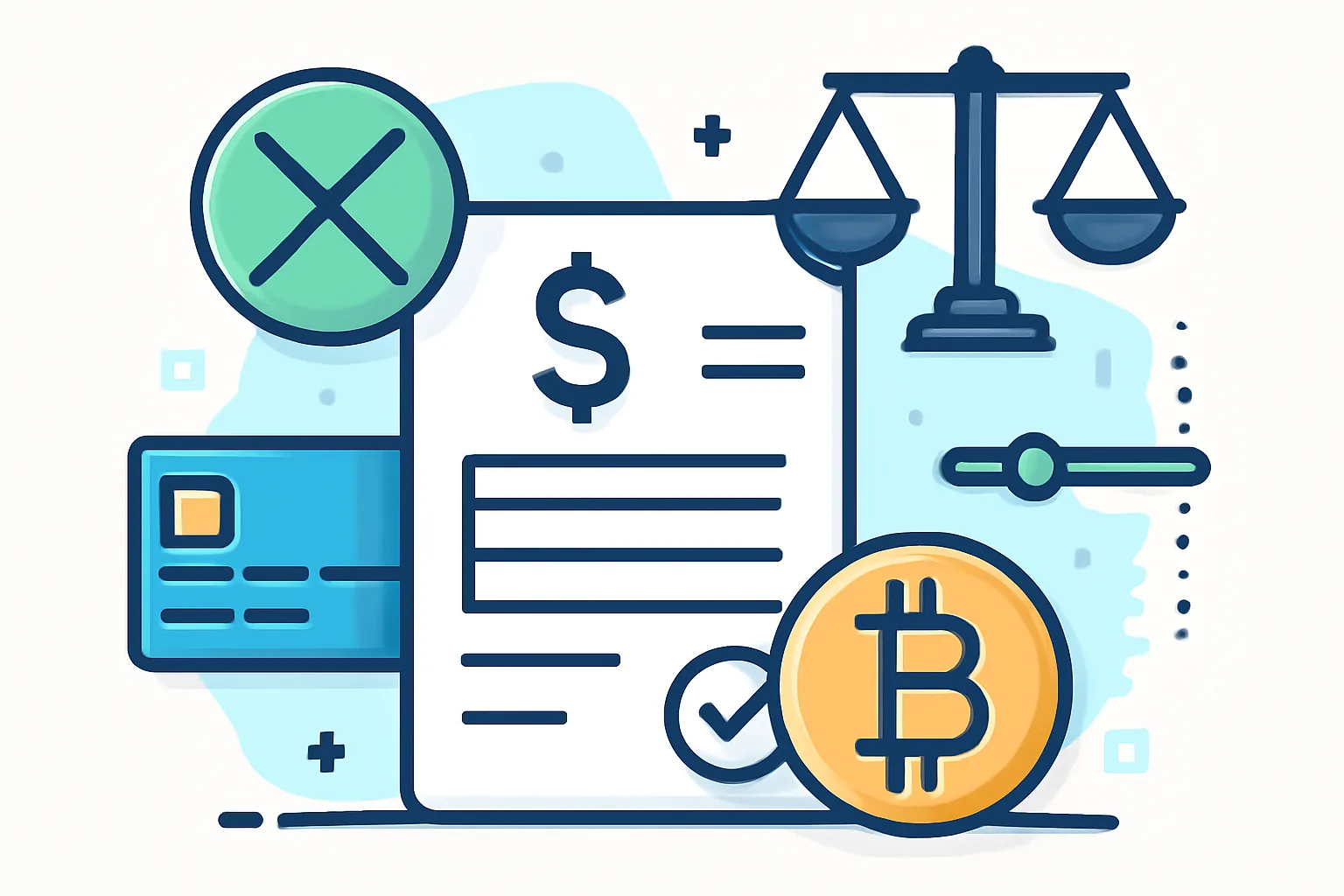
Is non-custodial crypto payment processing subject to VAT invoicing rules in the EU?
Learn how is non-custodial crypto payment processing subject to VAT invoicing rules in the EU affects merchant invoices, records, and settlement trails.
Practical guides for developers and businesses accepting cryptocurrency — security, integration, architecture, and operations.
Learn how is non-custodial crypto payment processing subject to VAT invoicing rules in the EU affects merchant invoices, records, and settlement trails.
Learn how to handle a crypto payment that is under the minimum amount, confirm the shortfall, review invoice status, and choose the next action.
A practical guide on how to accept crypto payments for agencies, covering retainers, deposits, milestones, invoicing, and contract terms.
Learn how beginners can start accepting crypto payments without coding using hosted checkout pages, payment links, QR invoices, and plugins.
A non-custodial crypto payment gateway subject to VAT reporting rules still needs clear records, invoice data, and fee splits for each sale.
Learn how to handle underpaid crypto invoices by checking on-chain details, deciding on top-ups, and sending a clear customer message.
Learn what crypto payment invoice limits mean, why they exist, and how they affect merchants, customers, and settlement flows.
Learn how Payora with WHMCS automated billing syncs payments, updates invoices, and reduces manual work for renewals and subscriptions.
Learn how a crypto payment gateway for subscription billing powers recurring crypto payments, automated invoicing, and subscription management.
Learn how a crypto payment gateway for freelancers simplifies invoicing, speeds payments, and helps manage crypto billing with less friction.
Create an account and have your first invoice running in under an hour.