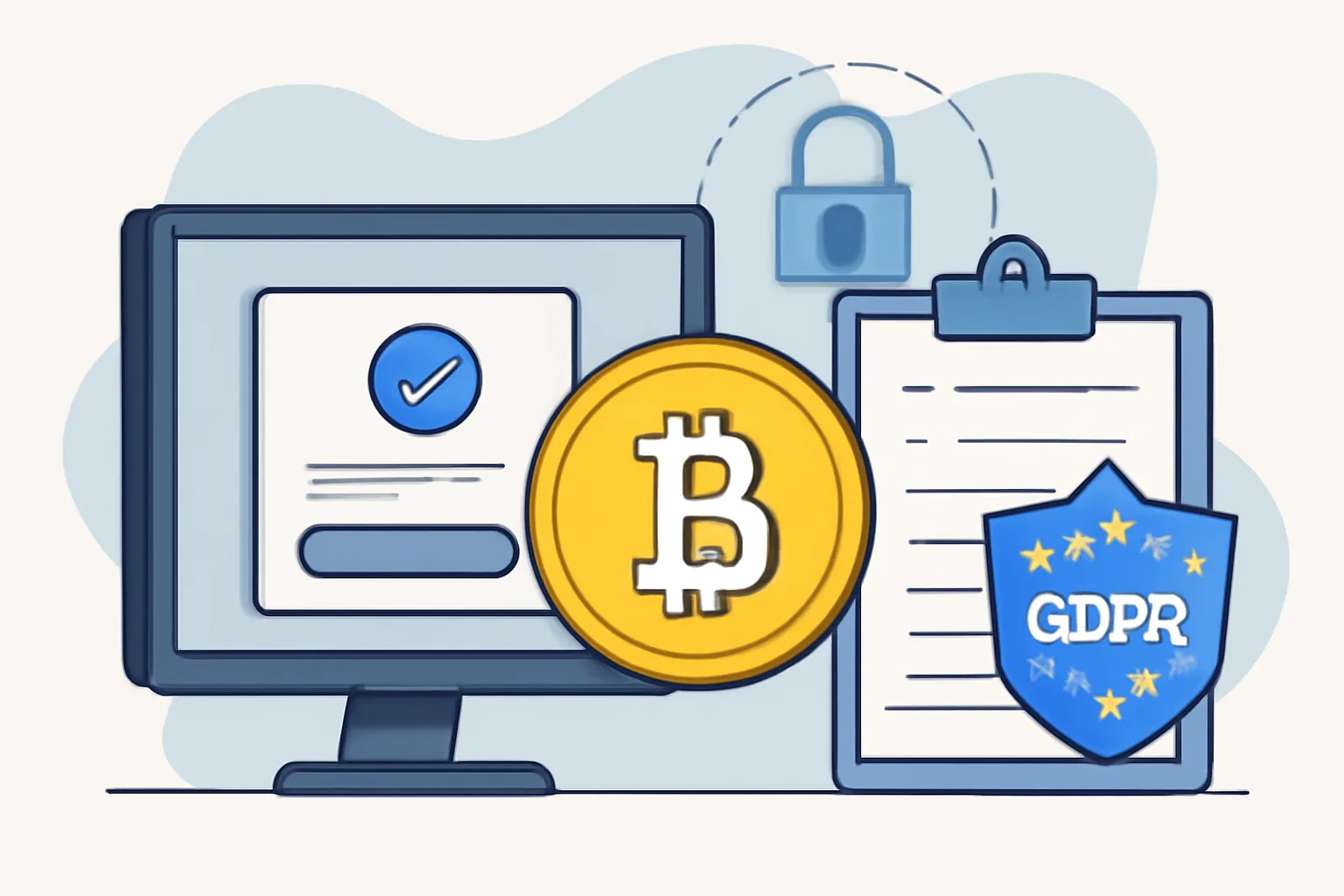
What a self-hosted crypto payment gateway is
A self-hosted crypto payment gateway is payment software you run on your own infrastructure, or on infrastructure you directly control. That sounds simple, and sometimes it is. The gateway can accept invoices, detect blockchain payments, match them to orders, and send status updates to your store or billing system.
The key point is control. If your team manages the server, decides which logs are kept, and chooses where backups live, then your team also shapes the data trail. A hosted provider may still process data on your behalf, but a self-hosted setup usually means you hold more of the operational responsibility. That matters later when retention periods are reviewed line by line.
Payment data can be broader than many merchants expect. A wallet address, a timestamp, an IP address, an invoice number, a customer email, and a shipping note can all appear in the same transaction record. If you are planning a store integration, the crypto payment gateway for ecommerce guide is a useful starting point because the way checkout data is collected affects what must later be deleted.
One detail trips people up: “self-hosted” does not mean “outside the rules.” It only means the operational burden has shifted. The records still exist. The obligations still exist.
When GDPR applies to crypto payment processing
GDPR applies when personal data is processed, and that test is usually broader than merchants first assume. If a crypto payment gateway handles data about an identifiable person, it can fall within GDPR even if the payment itself is made on-chain. A wallet address may be enough in one context and not enough in another. Context matters.
The location of the user matters too. If the payer is in the EU or EEA, or if your business targets those markets, GDPR can apply even when your server sits elsewhere. A company in Toronto running a node in Frankfurt does not escape the rule just because the machine is abroad. The server location is only one part of the picture.
Roles matter as well. Sometimes the merchant is the controller. Sometimes the gateway operator is a processor. In other setups, both parties make independent decisions about retention, fraud checks, or accounting records, and that can turn the analysis into a two-party exercise rather than a neat single-answer question. That split should be documented before the first invoice is issued.
So, is a self-hosted crypto payment gateway subject to GDPR data retention rules? In many common cases, yes. The label on the deployment does not change the fact that personal data may be stored, copied, backed up, logged, or exported. The compliance question starts with the data, not the architecture.
Which records count as personal data under GDPR
Under GDPR, personal data includes any information that relates to an identified or identifiable person. In a crypto payment gateway, that can reach further than a name field. A wallet address linked to a customer account, an IP log tied to a checkout session, or a refund note that mentions a client by name may all qualify.
Invoice records are another frequent source of risk. An invoice number alone may not identify anyone, but combine it with a business email, a shipping address, and a time stamp, and the picture changes quickly. The same is true of support tickets attached to failed payments. One line in a ticket can turn a technical record into personal data.
Transaction metadata is often overlooked. Amounts, timestamps, order IDs, browser fingerprints, and device identifiers can become personal if they can be linked back to a person, directly or indirectly. That linkage can happen through your CRM, your email system, or even a spreadsheet someone exported during a busy Friday afternoon.
Logs deserve special attention. Access logs, error logs, webhooks, and fraud alerts may contain identifiers that are not obvious at first glance. A wallet address in a debug file is still a record. A partial email in a support trace is still a record. Small details matter.
GDPR data retention principles that matter most
Three GDPR ideas do most of the work here: storage limitation, purpose limitation, and data minimization. Storage limitation says you should not keep personal data longer than needed. Purpose limitation says you need a defined reason for keeping it. Data minimization says you should only keep what you actually need.
Those principles sound abstract until someone asks why a payment log from 2021 is still in an active database. If the only reason is “we might need it someday,” that is weak. A retention period has to match a real purpose, such as chargeback handling, accounting, fraud review, or security investigations. “Just in case” is not a plan.
Retention periods need justification. A support log might be kept for 30 days. A tax record might be kept for years, depending on the legal regime. A fraud signal might be retained for a shorter period if it no longer helps protect the business. The important part is not the number itself, but the reason behind the number.
There is also a practical side. If you say data is retained for 90 days, but backups hold it for 2 years, your policy is fiction. This mismatch is common. It gets expensive during audits and awkward during customer complaints.
How retention rules work for self-hosted systems
Self-hosting shifts control, but it does not erase responsibility. The person or team that sets the retention schedule must be able to explain it, apply it, and prove it happened. If the gateway is run by the merchant, the merchant usually becomes the first place regulators look. If a developer manages the infrastructure under contract, the contract should say who decides retention and deletion.
That question appears in the middle of many legal reviews: who decides how long the data stays? In a self-hosted setup, the answer is often the merchant, the operator, or both. A provider that supplies code but not hosting may still process data during support or monitoring. A hosting company may keep snapshots for its own operational reasons. Each actor needs a separate retention story.
Self-hosting also creates copies. Databases, backups, object storage, queue messages, and log files can all carry the same payment information. If one system deletes data and another keeps a replica, retention has not really happened. The cleanup has to cover the whole chain, including automated exports and disaster-recovery storage.
This is why “self-hosted” is not a shortcut around GDPR obligations. It can make responsibility clearer, but it can also make mistakes easier to spread. One script can copy personal data into 4 places before lunch.
Practical retention policies for crypto payment gateways
Good retention policy starts with categories. Logs, invoices, refund records, fraud checks, customer support notes, and security alerts should not all share the same retention period. A gateway that keeps everything for the same length of time is usually keeping too much.
For logs, many teams keep only the minimum needed for troubleshooting, then rotate and delete on schedule. A 7-day or 30-day window is common in practice, but the right period depends on the system and the business need. If logs are needed for incident response, keep only the fields required, and strip direct identifiers where possible. A wallet address does not need to live forever just because a server had a bad night.
Invoices and accounting records are different. They may need longer retention because tax and commercial rules can require it. That does not mean every field in the invoice must remain visible to everyone. Access can be narrowed. The billing team may need the invoice, while the support team does not.
Refund data should be kept long enough to show who was paid, why, and when. Fraud-prevention records may justify a longer period if they support pattern analysis or dispute defense. Even then, the data should be reviewed regularly. A record that helped block one suspicious payment in March may not be useful in December.
Security records often have their own clock. Authentication logs, admin access logs, and webhook delivery logs may need to persist long enough to diagnose attacks or verify system behavior. If you use the webhook verification flow, your operational notes should reflect that logic; the how to verify payora signed webhooks article is relevant because webhook handling can create logs that should not be left sitting around without a reason.
Some records need legal retention exceptions. Accounting, tax, anti-fraud, and dispute resolution can all justify keeping specific data longer than your default period. The mistake is not the exception. The mistake is letting the exception become the default for everything.
Common compliance risks and mistakes
The biggest mistake is over-retention. Teams keep raw logs “for safety,” archive old invoices in three places, and forget about test databases that still contain live customer details. Then a year passes. Then another. By the time someone asks what is stored, nobody can answer cleanly.
Another common problem is weak lawful basis. A company may know it wants to keep data, but not why. GDPR expects a reason for processing, not a vague hope that the records will be useful later. If the reason is fraud prevention, say that. If it is accounting, say that. If it is support, say that too.
Excessive logging creates quiet risk. Developers sometimes record full payloads, including emails, addresses, and internal notes, because it helps debugging. It does help debugging. That is also the problem. A single error log can store more personal data than the payment page itself.
Deletion failures are another classic. A policy says “delete after 30 days,” but the cron job fails, the backup restore never got tested, or a CSV export lives in an employee inbox. The result is a retention policy that exists only on paper. Paper policies do not satisfy GDPR.
There is also a review problem. A system that was fine last year may not be fine now. New fields get added. New fraud tools get connected. New hosting regions appear. If nobody revisits the retention schedule after a change, the policy drifts away from reality. That drift is where many compliance findings begin.
How to build a GDPR-friendly retention workflow
Start with a data map. List every place payment data can appear: database tables, queue messages, logs, backups, analytics exports, support tickets, and developer test environments. If a record can hold personal data, include it. A 1-page map is better than a guess.
Next, assign a retention period to each category. Put the period in writing, along with the reason. One line per category is enough if it is specific. For example, “payment logs: 30 days for incident review” is far better than “kept as needed.” The second version tells nobody what to do.
Then lock down access. If only 2 people need invoices, only 2 people should see invoices. If developers need test data, scrub it first. If the support team needs transaction history, give them the least amount possible. Access control is not a side note; it is part of retention because unused data still creates risk while it sits visible to too many people.
Deletion routines should be automated wherever possible. That means scheduled purges, backup expiry rules, and a way to confirm deletion actually ran. Manual deletion can work for a few records. It fails fast at scale. One missed month becomes 12 missed months before anyone notices.
Review hosting and vendor arrangements too. A self-hosted gateway may still depend on email providers, object storage, monitoring tools, or managed backup services. Each one can hold payment data. Contracts should say what they store, for how long, and who deletes it. If you are changing platforms, a migration plan helps; the how to migrate from stripe article is relevant because migrations often copy old customer records into the new system without a fresh retention check.
Finally, test the process. Restore a backup. Check whether deleted records reappear. Confirm that logs rotate. Verify that archived invoices are still retained only where they need to be. A retention workflow is only real when someone has checked it end to end. One failed test is enough to reveal a policy gap.
Practical checklist for the next 30 days
Within 7 days, list the personal data fields in your crypto payment gateway and mark which ones are visible in logs. Within 14 days, assign a retention reason to each record category. Within 30 days, verify that deletion works for the database, logs, and backups separately. Those three steps cover far more ground than a generic policy document.
Set one owner for the retention schedule. Not a committee. One name, one backup name, and one review date. That makes the next audit easier, and it stops the familiar “I thought someone else handled it” conversation.
If you need a reference for handling payment data in a specific business model, the crypto payment gateway for freelancers article is useful because freelancer invoicing creates a narrow but very common set of retained records: invoice, payment proof, and contact details.
The last step is to write down the exception process. A legal hold, a tax rule, or a fraud case may justify keeping data longer. Say who can approve that, what evidence is needed, and when the exception expires. If the exception has no end date, it is not an exception. It is just retention by habit.




Comments